%20-%20Copy.png)

Commercial Solar Sizing: Avoid Costly Mistakes & Maximize ROI

Updated: May 18, 2025
Introduction: Why Commercial Solar is a Game-Changer (When Done Right)
For businesses, solar isn’t just about reducing electric bills—it’s about ensuring uninterrupted operations, protecting equipment, and futureproofing against rising energy costs. But undersized or poorly designed systems can lead to downtime, damaged machinery, and wasted capital.
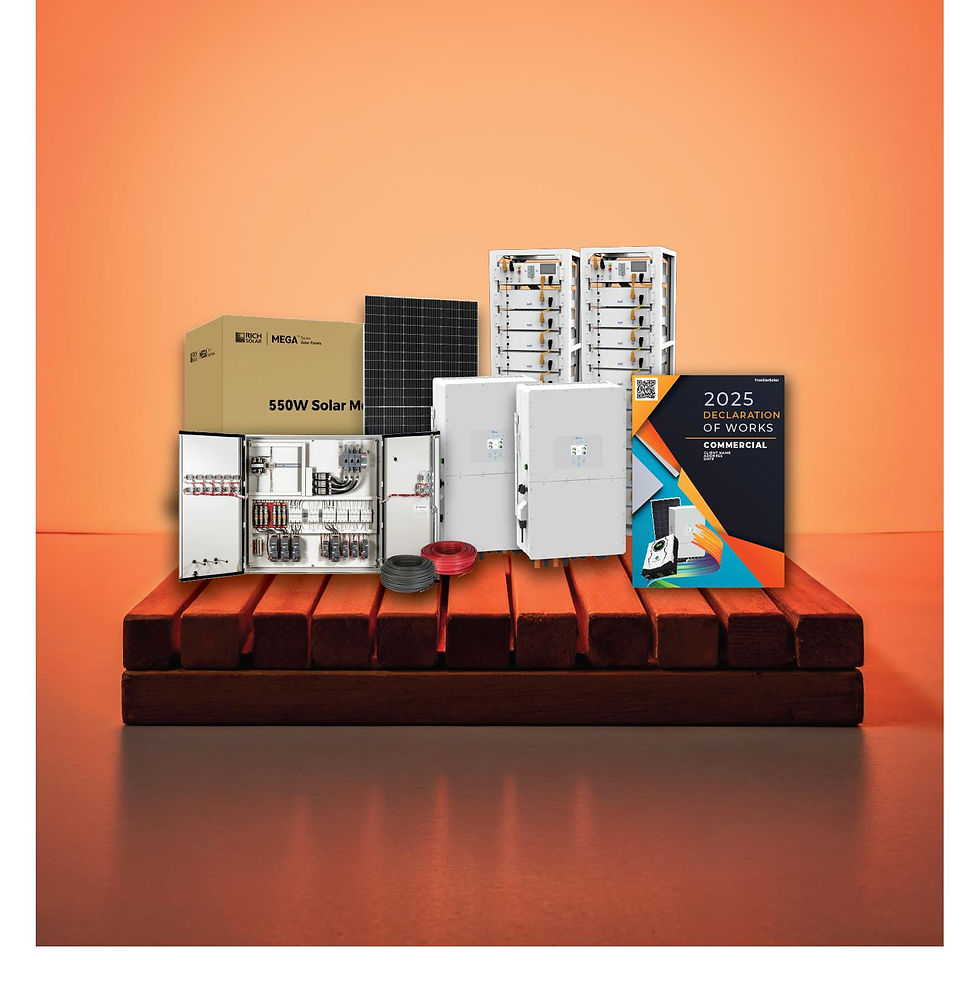
At Frontier Solar, we can help your farms, factories, and shops avoid these traps. Here’s your blueprint for commercial solar sizing done right.
Step #1: Conduct a Detailed Energy Audit
Start by understanding your actual energy needs:
Review 12 Months of Electric Bills:
Identify monthly kWh averages and peak demand loads (kVA).
Example: A factory uses 12,000 kWh/month (400 kWh/day) with a 100kVA peak demand.
List All Equipment:
Include motors, pumps, refrigeration, compressors, and office loads.
Critical vs. Non-Critical: Prioritize equipment that must run during outages (e.g., cold storage, servers).
Operational Hours:
Do you run 24/7 or only daylight shifts? Solar needs vary drastically.
Step #2: Size Your Solar System for Business Realities
A. Daily Energy Demand
Solar System Size (kW) = (Daily kWh Usage)/(Peak Sun Hours) × 1.2
Peak Sun Hours in Zimbabwe: ~5 hours/day.
1.2 Buffer: Accounts for inefficiencies (inverter losses, dust, aging).
Example:
Daily Usage = 400 kWh
System Size = (400 ÷ 5) x 1.2 = 96kW
B. Peak Demand (kVA):
Inverter Size = Peak Demand x 1.3 (30% buffer for surges).
Example: 100kVA peak → 130kVA or more inverter setup total.
Step #3: Prioritize Critical Loads for Battery Backup
Not every machine needs backup power. Focus on essentials:
Business Type | Critical Loads | Battery Priority |
Farm | Irrigation pumps, cold storage | 8–12 hours runtime |
Factory | Assembly line motors, safety systems | 4–8 hours runtime |
Supermarket | Refrigeration, POS systems, lights | 12–24 hours runtime |
Office | Servers, computers, security | 8–12 hours runtime |
Battery Formula:
Bank Size (kWh) = (Critical Load (kWh/day) × Runtime Days)/0.8(DoD)
Example (Supermarket):
Critical Load: 80kWh/day (freezers + lights)
Runtime Goal: 1 day
Battery Bank = (80 x 1) ÷ 0.8 = 100kWh
The High Cost of Under sizing Commercial Systems
Many installers cut corners to win bids. Here’s how it backfires:
Downtime Disasters:
A undersized inverter trips during peak production hours, halting assembly lines.
Real Case: A bakery lost $1,500 in spoiled goods when their 50kVA inverter failed under a 70kVA load.
Battery Bankruptcy:
Cheap lead-acid batteries degrade fast, requiring replacements every 2–3 years.
Non-Compliance Fines:
Systems violating ZWS/IEC standards risk fines or voided insurance.
Frontier Solar’s Commercial Design Principles
3-Phase Ready: Proper load balancing to prevent phase imbalances.
Scalability: Design for easy expansion (e.g., adding panels or batteries).
Hybrid Systems: Integrate solar, grid, and generators for 24/7 uptime.
Tier-1 Components: Industrial-grade inverters (e.g., Atess, Deye) and corrosion-resistant mounting.
Free Commercial Solar Assessment
📊 Book a Professional Audit:
Site Visit: We analyze your load profile, roof/land space, and grid connection.
Financial Modeling: ROI projections, payback periods, and financing options.
Compliance Check: ZWS/IEC compliance guaranteed.
Visit: www.frontiersolarzw.com
Call: +263 777 978 326
Was this easy to follow?
Yes!
No, very confusing


Comments